As the wheel of the year turns again, we arrive at Lughnasadh or Lughnasa, a vibrant celebration of the harvest. This is technically the first festival for the modern year of the Witches Wheel of the Year, if we are to go by our very much out-of-sync-with-natural-cycles modern Gregorian Calendar, but it’s not so for us Witches – another article on that is brewing! In this form, it is originally a Celtic festival, that marks the height of summer and the bounty of the earth.
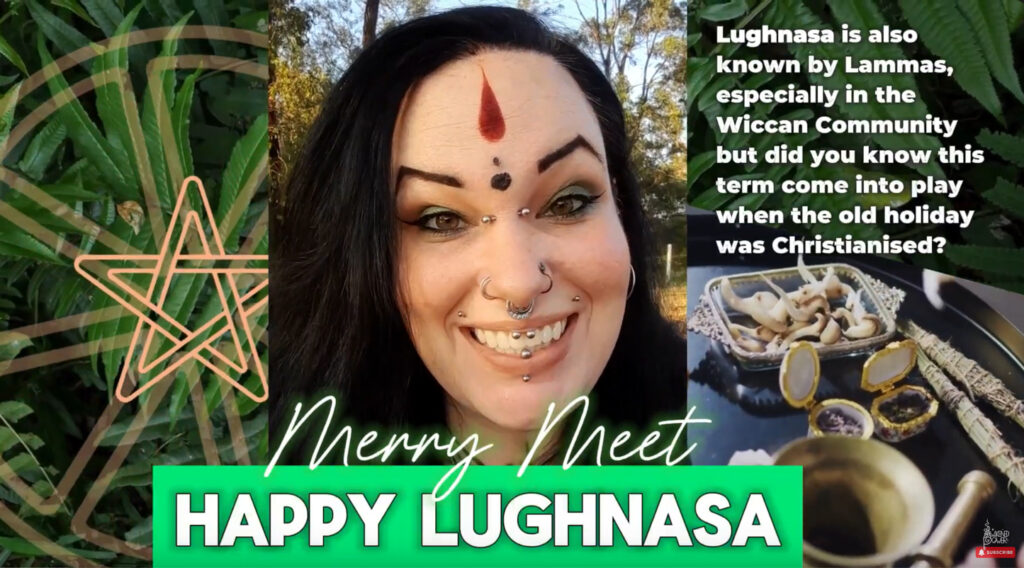
These days, more people are familiar with the term Lammas, which actually has early Christian origins (and also is why some Witches, myself included don’t favour it) but stick with me as this post explores not only the traditions of Lughnasadh but also makes note of some deities from other cultures that you might connect with more to create your own special way of celebrating. We’ll also discuss the concept of the “Wheel of the Year” and its relevance in modern spirituality.
Whether you’re a Pagan, Witch, Wiccan, Heathen, Hindu, Christian or otherwise, the turning of the seasons is 1. undeniable and 2 something crucial for the existence of life on earth, as we know it. In our modern societies, there is a tendency to be cut off from nature, either through lack of interest or being busily distracted with worldly happenings. After all, there is a whole system in place to support this disconnection so it’s completely understandable, but at least a few of those groups I mentioned, still hold this as a sacred part of their belief system, and very way of being.
Speaking for myself, as a Pagan, I think that the fundamental mistake most people make is believing we are separate to nature, and not a part of it – something I’ve spoken on many times. Our very bodies (or biological system, if you’re familiar with my YouTube episodes, my wording preference will make more sense) are accumulation bodies, made solely from the earth. The input we consume becomes the building blocks for our biological system to grow and be sustained. Everything from the clothes you are wearing to the device you are reading this on, is only possible because of the earth, allowing us to share her gifts. The whole Witches Wheel is essentially to honour all stages of this cycle, showing gratitude for the spoke we have reached and taking a conscious, dedicated moment to have hope that the wheel keeps turning. By honouring the cycles of life and death in nature, we become comfortable with the same reality in our own lives and those we love.
I have posted before about how there are substantial reasons for either or both celebrating any of the Sabbats, Equinoxes and Solstices on the Northern hemisphere dates, those more widely known even if only for the modern equivalent occasions like Christmas, Easter, Halloween etc and also the Southern Hemisphere counter dates. The modern busy Witch may even chose to combine them, and get more bang for her spellcraft. I won’t get back into that here though, but check out my post The wheel turns again, with Summer Solstice to ponder where you stand on that one. For this Aussie Witch, this date does mark Lughnasadh for 2025, which is the first of three harvest festivals in the Witches year.
The Origins of Lughnasadh
Lughnasadh, named after the Celtic god Lugh, is traditionally celebrated on August 1st. It is a time to honour the first fruits of the harvest, especially grains and cereals. According to myth, Lugh established the festival in honour of his foster mother, Tailtiu, who died from exhaustion after clearing the plains of Ireland for agriculture. Technically he is the namesake though this festival isn’t about him, something a lot of people have forgotten. Graines from the first crop harvested, would be used to bake bread that was shared communally to celebrate a successful season, honour the harvest Gods, the elements and importantly all of the human effort that lead to that feast of connection.
With the rise of Christianity, Lughnasadh transformed into Lammas, or “Loaf Mass,” reflecting the new religious context. On Lammas, people would bake bread from the first wheat harvest and bring it to church for blessing. This name is what stuck, with the modern adaptation of a formalised ‘Wheel of the Year’ by Gerald Gardner who is consider at the Founder of Wicca, which gained popularity between 1950-1970. Traditionally, if you are in the Northern Hemisphere this occasion would be around 1 August, or 1 February for the Southern Hemisphere. This year, the actual date for us Southern Hemisphere Witches is 4 February though you may know my beliefs on energy forms being always available by now – but that’s a topic for another article.
Personally, I am not a Wiccan but for anybody beginning their journey into the Occult, even if just trialling what feels right, chances are Wiccan learning resources will comprise most of your foundational understanding. I’d estimate at least 80% of most books and articles you’ll come across, especially starting out are of Wiccan origins. Wicca though was just a modern take, a resurgence of sort that suited a contemporary need rising in the Collective. It is an accumulation system itself, drawing influence from many ancient sources and trying to make a more cohesive and accessible system for the modern Mystic in training.
Some Witches, Pagans and Heathens choose not to follow the Wheel of The Year because of this modern creation but these festivals but as I have hinted to, these too all have deeply rooted origins, in all ancient believe systems and lifestyles that the Earth and turning of the seasons played a vital part. Individually, there were differences between when and how they were celebrated, what they were called and some occasions were held as most important based on location that others, but the common thread was a internal connection to the cycles of life and how they reflected and were in a symbiotic relationship with the natural world.
Counterparts of Lugh & Harvest Deities in Other Cultures
Many ancient cultures had deities that shared similarities with Lugh, particularly in their association with agriculture, light, and skill:
- Greek Mythology: Apollo, the god of the sun, music, and prophecy, can be seen as a counterpart to Lugh in his association with light and skill. Demeter, the goddess of the harvest, also shares a connection with the agricultural aspects of Lughnasadh.
- Roman Mythology: Mercury, the god of commerce, communication, and craftsmanship, shares similarities with Lugh’s attributes of skill and craftsmanship. Ceres, the goddess of agriculture, is akin to Demeter and shares a connection with the harvest.
- Egyptian Mythology: Osiris, the god of agriculture and fertility, is associated with the annual flooding of the Nile, which brought fertility to the land. Ra, the sun god, shares the connection with light.
- Norse Mythology: Freyr, the god of fertility, agriculture, and prosperity, is closely linked to the harvest. Baldur, the god of light, can also be seen as a counterpart to Lugh in his association with light and beauty.
Lughnasadh’s Modern Significance
Despite the different names and traditions, the essence of the festival remains the same: a time to celebrate abundance, community, and gratitude.
Modern Celebrations for Witches & Spiritual Practitioners
Modern celebrations of Lughnasadh often include rituals that honour the harvest and the cycles of nature. Common practices include:
- Baking Bread: Using the first grains of the harvest to bake bread, which is then shared with the community or offered in rituals.
- Feasting: Gathering with family and friends to share a meal and give thanks for the abundance of the earth.
- Rituals and Offerings: Performing rituals to honour the deities associated with the harvest, and making offerings of grains, fruits, and other symbols of abundance.
- Crafting: Creating corn dollies, wreaths, and other crafts that symbolise the harvest.
Lughnasadh is also a time for reflection and gratitude, allowing practitioners to connect with the cycles of nature and their own spiritual journeys. The festival serves as a reminder of the interconnectedness of all life and the importance of nurturing and honouring the earth.
By continuing to celebrate Lughnasadh and similar festivals, we connect with the ancient rhythms of the earth and the shared heritage of humanity. As with anything in the Craft, the important thing is listening to what resonates with you. You may not be a Wiccan either but if you feel called to honour a Solstice then by all means, crack open the fancy candles and finest incense, get some kitchen Witchery happening and create a feast, have a ritual bath or simply take half an hour to sit in meditation or reflect on what this spoke of the year means to you. This article is simply to shed some light, and hopefully spark a few thoughts on how you may incorporate such an event into your own practises.
Blessed Be xo