Regardless of whether you celebrate Summer Solstice, Midsummer, Kronia or Litha – the essence remains the same. The longest hours of the daylight mark a harvest festival, a time to honour the Summer Deities and the peak of the fiery, fertile energies that dominate. Tradition shows it was as a time to partition the Gods for a bountiful harvest and commemorate the occasion with indulgent celebrations. This Solstice embodies the cycles of life and death, ushering in the next phase of the Witches’ Wheel.
Even if you are a seasoned Occultist like myself, or if you are just getting into the craft, you may have heard that these ‘holidays’ are modern creations. Perhaps, you are reading this with the delightful curiosity of an open mind, I sure hope so! You may also have slight confusion over the dates in the Northern and Southern Hemispheres, or rather which you should celebrate regardless of where you are. I want to clarify some of that. I also want to create enough space and energetic permission for you to decide whether or how you choose to celebrate them.
First things first, I want to speak to my fellow practitioners, especially those newer to their journey in the craft. Missing a Solstice, Equinox, Sabbath, Astrological transit or even a Moon phase does not make you a ‘Bad Witch’. These natural milestones serve as tangible energetic possibilities – not obligations. You can tap into them directly to enhance any spell, energy work, divination, meditations, or simply be content in the knowing that you are connected to a timeless practise of honouring Mother Nature.
These milestones open intense energetic portals, often imbued with thousands of years of collective worshipping. This large scale and long lasting focus creates powerful thoughtforms that you can work with, offering incredible magickal potential from a practical standpoint. Witches are an innovative bunch, we use every tool available to us. The spokes of the seasonal wheel are another way we can turbocharge our impact and continue to strengthen our connection to the Divine, in whatever shape or current we resonate with the most.
Many of these milestones or portals are available to us for several days. However, that’s something we can dive into another time. One thing that needs addressing straight up is the language for occasions like the Summer Solstice, or Kronia, if you’re drawn more to the Greek pantheon like myself. As with many ancient belief systems, whether religious or spiritual, often dominant powers of the time (or conquerors) absorb current celebrations and deities, giving them new names but a similar flavour. This strategic process is aimed at heightened conversion rates from the ‘old religion’ or native practices. Familiarity breeds less resistance, minimising risk of rebellion – though we see many examples of such violent, demolitions throughout history.
This process of merging or assimilating the ‘olde ways’ is called syncretism and is historically, highly successful and the norm. Though, not always through genuine belief switching, but rather through fear tactics and societal pressure. Many practitioners would still have their household deities and private practices. These traditions gradually watered themselves down, naturally through the generations (and collective programming – another topic for later).
Thankfully, today we still have growing access to ancient wisdom teachings as this process also saw the necessary rise of underground movements, mystery schools, orally transmitted and heavily guarded sacred teachings. Not to mention the inner awakening of ancient knowledge due to the current active spiritual processes at play in this era of the Global Ascension – yay us!
“Now is a crucial time within our collective spiritual journey, where I believe it’s pressing to reestablish our complimentary role within the natural world. To remember we are a symbiotic player, a essential cog in a bigger system, immersed in the ebb and flow of natural cycles and events, including this Solstice.”
This article isn’t a deep dive into the historic conversion of different traditions. However, this point explains partially why we know an occasion such as this by many names. What few people realise, many Witches included, is that some of these well-known names, actually have more modern origins and all traditions share vast commonalities. Reconnecting these common threads in religions, spiritual beliefs, and mysticism is something I find really exciting!
Exploring the Summer Solstice
The Summer Solstice has been culturally significant since pre-recorded history. Perhaps, even more relevant than in modern times, as people lived in a symbiotic relationship with nature. This is because they knew they were a part of it—not separate from it as is often perceived in the ‘modern hierarchy of things’. This sacred time has always marked the turning of the seasons or the Wheel of the Pagan/Witches’ Year as it has come to be known.
Interestingly, the ‘Wheel of the Year’ title has only been used in the mainstream since the mid-1960s as part of the Wiccan resurgence movement, along with terms like Litha, Ostara, and Mabon, more on all of that another time – even if the words themselves have older influences.
The Summer Solstice marks the longest day of the year—a time to welcome the Summer Gods and pray for a bountiful harvest. It honours the natural cycles of life and death but is primarily a fertility festival. In an upcoming post, we’ll explore the wheel of the year in total and delve deeper into the origins of different celebrations across the globe and throughout timelines. Some of you likely have just celebrated your Winter Solstice or Yule and are probably wondering if I have my dates mixed up.
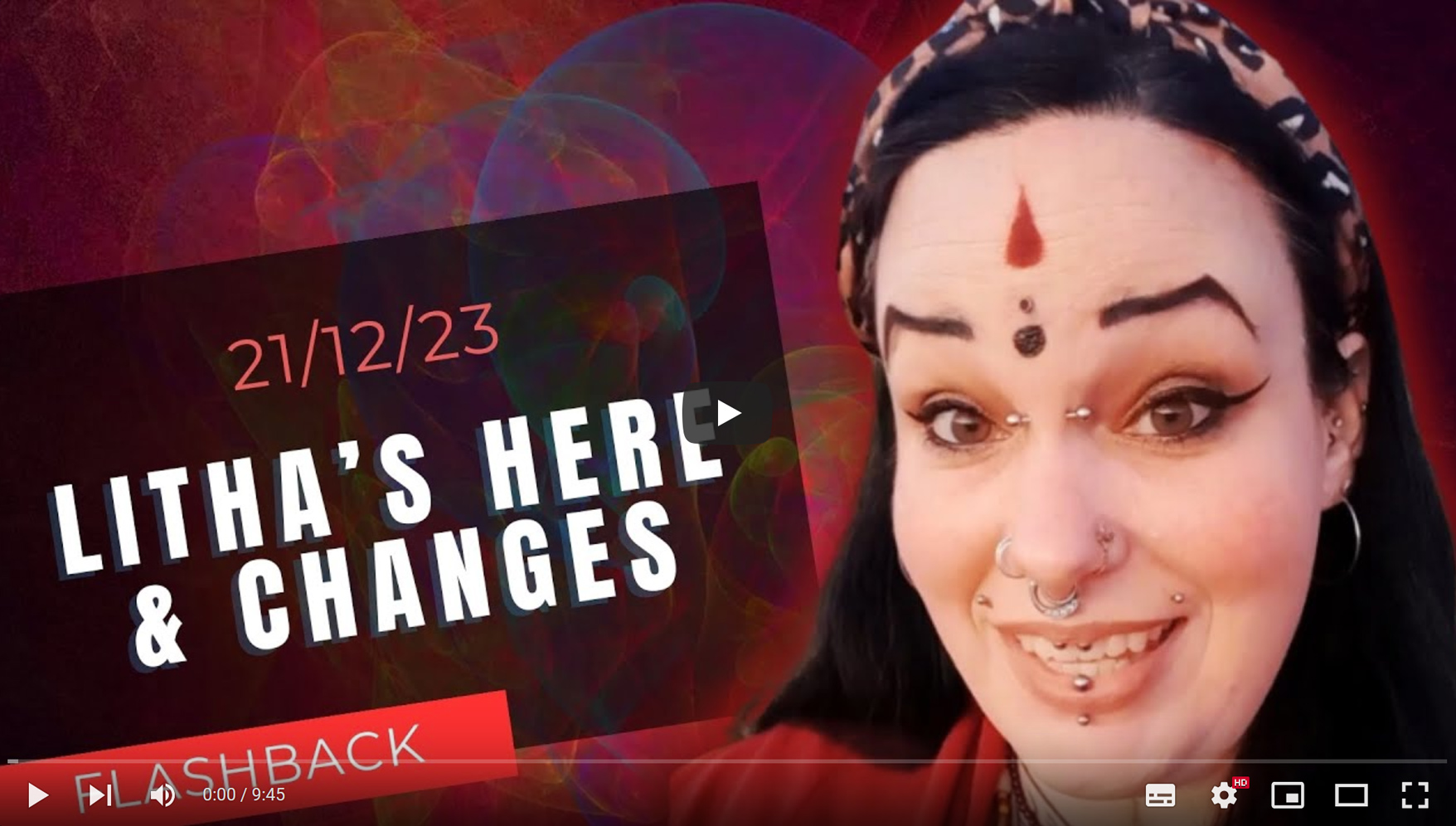
That’s totally understandable, my Northern Hemisphere friends, I get it. I encourage you to read on as there’s a good reason for understanding our opposing hemispheres’ locations within the Pagan calendar, which I touch on in my YouTube video on Lughnasa. I’d love to hear your thoughts in the comments! Head over and watch that video if you haven’t already—regardless of the time of year, there are helpful tidbits of information.

In the Southern Hemisphere, December 21 (give or take) marks the Summer Solstice as it is the peak of our summer. Since paganism is essentially a nature-based worshipping system, it makes sense to tap into the dominant energies available to us based on our location on this day. If you’ve watched my previously mentioned video, you’ll know I also completely see valid reasons (and highly practical ones from an Occultist perspective)for celebrating our seasonal counterparts, whether standalone or alongside your local dates.
While this occasion focuses on the dominant solar current, harvest, fertility, and abundance, it also marks a turning point as the sun begins its decline. In the mythologies of the dying God, the God reaches his peak at the Summer Solstice and then starts his decline, waning in power by Lughnasa (Lammas) and dying by the Winter Solstice, only to be reborn by the Goddess.
Inline with this, many Summer Solstice celebrations revolve around themes of purification and rebirth. Almost all cultures and traditions involve big fires, often communal and singing, dancing, feasting, drinking and festivities are normally standard features. Given its association with fertility, it was also a time for love magick and divination rituals to foresee future partners, such as water gazing and turning to the wisdom of plants.
Names & Ancient Origins
Summer Solstice – This is the most commonly recognised term in the modern era that also lends to a broader, more eclectic type of celebration of ‘whatever goes‘ for modern Witches. Regardless of your personal preference between pantheons or mythologies, this sort-of blanket term covers it all.
Imagine the collective vibrant energy of all of these ancient celebrations—people coming together to honor the longest day of the year, drawing upon the sun’s peak strength, worshipping various Gods and Goddesses – why wouldn’t you want to partake in that! Regardless of the name, the essence of the celebration remains the same: a powerful time for renewal, growth, and gratitude for the bountiful Earth.
Litha – The name “Litha” traces its origins back to the early 8th century, appearing in the writings of a monk who referenced this northern hemisphere period of the June/July time frame – not the festival we know it as. However, it’s a relatively modern term in relation specifically to the Summer Solstice that saw a revival in the 1970s, thanks to Aidan Kelly. Whilst your Great, Great, Great Ancestor, three times removed, might not have detailed their love for Litha in their Grimoire, the seasonal celebration would undoubtedly have been a significant time for their practices.
This revival of Litha in modern times shows our enduring bond with the cycles of nature. This connection remains strong, no matter the terminology we use.
Midsummer – There is some debate between the use of this term as separate to the Solstice or interchangeable with it. Collectively, more often than not there is no differentiation so it’s worth including here. The term Midsummer (on the surface) has Old English origins, and it has Dutch & Scandinavian cognates of midzomer, and midsommar, so it may even come from an older Germanic language.
Interestingly, in some languages and traditions, Solstices are considered to start or separate the seasons; in others they are considered to be centre points which can see the Solstice and Midsummer for example, as being celebrated on different dates. This is partly reason for the timing confusion of this specific named occasion.
However, meteorologically speaking, the summer solstice is the time of year when things are just starting to warm up. As an Aussie Witch, I can say from my own experience that my face has been melting for some time now. For me, this definitely does not mark the start of the heat, and my unfortunate persistent suntan provides evidence for this.
So, personally I see the Solstice as the peak, rather than start of summer and a turning point to our nights becoming longer. This is inline with how I celebrate and understand the significance of its symbology.
I do think our seasons have shifted slightly, which isn’t necessarily always reflected in our celebrations. Speaking from a gardening perspective, the years have changed drastically for sowing and harvesting times, adding to the argument that seasonal celebrations have become more subjective.
In this case, the question then becomes relevant: “Do your celebrations follow the cyclical rhythm of nature, or the available, accumulative energetic portals?” – Definitely food for thought. The rule of sympathetic correspondence magick, makes me believe that the same potentials are available to you, even if the date is a week different in your location to what Google tells you.
Kronia – It’s important to note, there wasn’t any one specific date for Solstice, in the Ancient Greek world but rather a collection of local events that gradually became celebrated on common dates.
From the Greek pantheon, the festival of Kronia evolved as a celebration devoted to Kronos, the father of Zeus. It wasn’t just a single day but rather a multi-day celebration that saw a temporary equalising of societal hierarchy, where slaves and lords would celebrate together, sometimes even in symbolic role reversal. With this theme of breaking societal norms, similarities can be seen in the Roman festival of Saturnalia, which was closer to the Winter Solstice and directly influences what we globally recognise as Christmas—more on that another time.
At this time, the Ancient Greeks also celebrated the return of Persephone, Goddess of harvest and agriculture, from the underworld as it was a time when the land was reborn and bloomed. In contrast, her return to the underworld saw a decline in fertility of the land and life. This story is a personified, symbolic representation of the turning of the seasons, of course.
People would also gather at crossroads to ignite communal bonfires. These flames served as a ritualistic means for individuals to ‘cleanse’ or purify themselves of the past year, symbolically by discarding waste. This tradition embodies a fresh start and the hopeful promise that came with the returning Sun. Much like the celebrations we see on New Year’s Eve today, remember this occasion was the start of the Calendar year in many ancient cultures. In this light, celebrations would seem to have been more appropriate for the start of the season, rather than it’s peak as we do now.
This reinforces my point of sympathetic correspondence magick, as you may now see, our modern dates already have a mismatch with some ancient practises.
Additionally, ‘Fires of Fortune’ were lit, usually the night before Solstice where the people would proclaim passionate vows, leaping over the fires to seal their commitments. In ancient societies, fire was considered a divine element, often gifted by higher powers, and held significant importance during both major and minor Solstices, as well as in general ritual practices.
Vestalia Festival – A sacred time dedicated to honoring Vesta, the Roman goddess of the hearth. The name of this festival is derived from her, though it encompassed much more than this. Vestalia festival was also the only occasion when married women were granted permission to enter the sacred temple of the Vestal Virgins to make offerings to Vesta. As the goddess of the hearth, Vesta symbolised the home and family, elements central to fertility and the sustenance of life. It was also a time to celebrate the unique roles and contributions of individuals within their communities.
In addition to honoring Vesta, this period was also devoted to celebrating Juno (after whom June is named, corresponding with the Solstice in the Northern Hemisphere). Juno, the wife of Jupiter, was the goddess of women and childbirth and was known for bestowing the privilege of menstruation upon women, thereby also reinforcing the links with this time to fertility, much like the Greek Kronia festival.
Midsommerblót – While often associated with Viking summer solstice traditions, this was a sacred occasion for many Nordic cultures that pre-date the Vikings. This festival was not only a time to honor the sunlight (extremely important for largely seafaring people), fertility, and prosperity it brought to the land and people but also an essential period for addressing important matters like discussing legal issues and resolving disputes.
Celebrations typically included large bonfires, feasting, dancing, and reveling in the arrival of summer. People celebrated the reaping of crops and the season’s abundance, once again reinforcing their connection to the natural world and the cycles of the Earth.
In Ancient Egypt, the Summer Solstice also marked the beginning of the new year. This period coincided with the annual flooding of the River Nile, ushering in the wet season that brought essential life-giving water to the land, crucial for the upcoming harvest. The Solstice was revered as the most important day of the year.
Egyptians paid homage to Sirius(Sopdet), the brightest star in the sky, which they believed was the birthplace of the goddess Isis. New Year’s celebrations began at dawn when Sirius appeared on the horizon, shining as the morning star emerging from the underworld’s darkness.
In Egyptian mythology, the narrative of a dying God and a pregnant Goddess is also integral to their understanding of the cycles of nature and the pivotal role of the yearly “divine rebirth” of Egypt. According to the myth, the annual rise of the Nile is attributed to the tears of the mourning Isis. These tears are shed for her deceased husband, Osiris. This act symbolises her deep grief but also marks the beginning of new life, as Isis becomes pregnant with their child.
It is well known that the alignment of significant ancient structures, including the pyramids, were meticulously designed to honour this magical turning point on the seasonal calendar. This alignment is evident when viewed from the Sphinx too, as the sun sets directly between two of the Great Pyramids.
Even as little as is known publicly about Maya and Aztec celebrations of the Solstice, the ruins of temples, public buildings and other structures often precisely aligned with the shadows cast by major astrological phenomena, particularly the Summer and Winter Solstices.
Following from this, of course I could not finish an article on the Summer Solstice without giving a special mention to Stonehenge which was built to align with the sun on the Solstices. On this occasion, the sun rises behind the Heel Stone in the north-east part of the horizon and its first rays shine into the heart of Stonehenge.
Regardless of the ongoing debates of many of these ancient structures purpose, the importance of the Summer Solstice is evident, even preceding written records (available to us, that is) and is universal throughout cultures and timelines.
Now is a crucial time within our collective spiritual journey, where I believe it’s pressing to reestablish our complimentary role within the natural world. To remember we are a symbiotic player, an essential cog in a bigger system, immersed in the ebb and flow of natural cycles and events, including this Solstice.
I believe, we need to establish a modern Arcadia where we live in harmony with nature. That might just be in your apartment or in a small, community driven by change-makers and people motivated by helping each other. All changes start within.
We move forward as a species, when we get back to the fundamental understanding that physical life only happens because of a biological system that is synchronised to the phases of the moon. This is supported and sustained by the continued accumulation of pieces of earth and the play of elements, that all takes.
This, of course is otherwise known as conception, eating and existing. The human system cannot survive separate to the natural world, isn’t it time we all honour it – just a little more than we do in our own lives already. I’m an avid Gardener and proud Pagan but I can still agree with that need for me, I’m sure you can too!
Regardless of how you practise, or simply acknowledge this turning point of the Witches Year, allowing yourself to ponder on its meanings may reveal some surprising revelations – if you are willing to listen. On that note, lastly I will leave you with a few prompts to ponder or journal on:
Personal Connection:
Think about how your own practices today connect you to these ancient roots. How do you honor this time of year?
Is there a particular culture or tradition you feel especially connected to during the solstice? Why does it resonate with you?
What are some unique ways you celebrate the Summer Solstice? Have you created any new traditions of your own?”
Historical Context:
Do you see a connection to your own inner-revival of coming back to nature and the intricate web of life?
Are there any old traditions you’d like to revive?
What other ancient festivals have you yet to rediscover and integrate into your contemporary spiritual practices? Is there something you have been drawn to but not followed up on?
Let me know in the comments below what your thoughts, experiences and practises are. How did you celebrate this Solstice?
Follow me on YouTube, IG and TikTok – and reach out on here with any questions or things you’d like me to cover.
Thank you for investing your time and energy on this piece. I hope it has enriched your life in some way. Perhaps, it provided new perspectives to ponder. Or maybe it offered inspiration to tap into the magickal possibilities of your next Wheel of the Year celebration.
Blessed Be xo