How many times have you heard people say, “Christmas? I don’t believe in that!”? Perhaps you are one of them, and that’s okay. But maybe it’s time to deep dive into the origins of this occasion. This Witch has many beautiful heathen reasons to embrace this now overly commercial and misunderstood holiday. Like the Summer Solstice and other festive occasions, there are normally deeply rooted traditions and often-forgotten ancient connections.
Christmas is something globally recognised and celebrated, but a part of me chuckles at the thought of how mortified some people would be to know their whole day has undeniable Pagan origins. Oh, the horror!
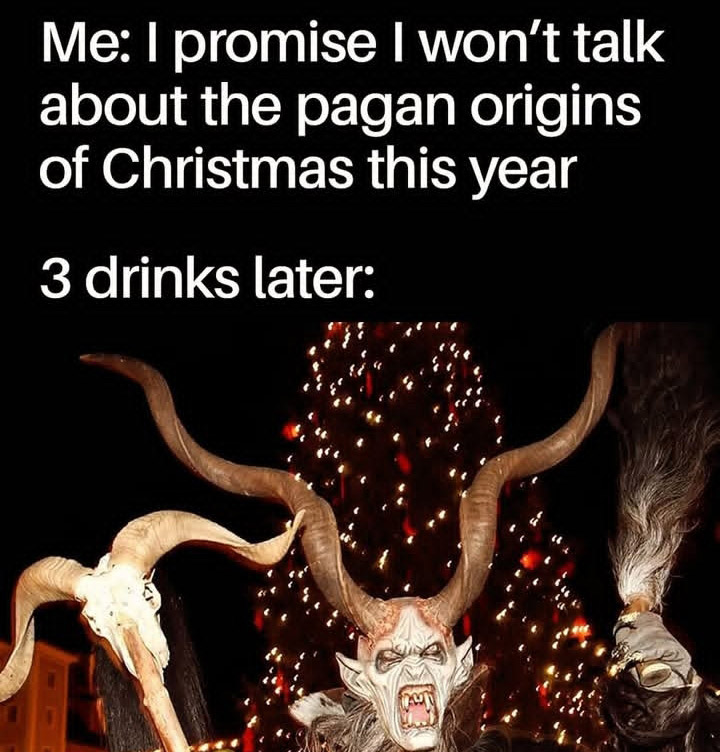
Historically, Christmas has been tied more closely to the festival of Winter Solstice, or Yule. Much like I describe in my Summer Solstice post, almost every culture had its own way of celebrating this spoke in the Wheel of the Witches Year.
In our household, even though we reside in the Southern Hemisphere – we give a special acknowledgment to Saturnalia (despite it’s Roman origins). The Romans, notably were the ‘changing of the guard’ from the Greek stronghold era so their deities and celebrations mirror each other very closely. This occasion though, is closer to the Greek Summer Solstice celebrations of Kronia – perhaps that’s another reason why we love it!
The name Saturnalia comes from the fact that it was a festival that honored the God of agriculture and time, Saturn. I like to imagine Saturn (or Kronos) looking down with a wise smile as we continue the indulgent festivities. Interesting fact: during these celebrations, statues of Saturn that were sometimes otherwise bound at the feet, were also given extra freedom of the shackles being removed, presumably so he could party on too!
Saturnalia did start as a single-day occasion but turned into a week-long festival that saw slaves often released from normal duties, celebrating, and sometimes also participating in a role reversal. Other traditions from this event too, reflect the current practices of Christmas, with gift-giving and festive dress-ups, but there is something more in that last part, which we’ll get to. This carnival-like celebration is still a super powerful, collectively driven energetic possibility this Witch totally embraces!
So, that explains the gift-giving we associate with this time of the year, but what about the rest of the title to this post? Let’s get into the most obvious and perhaps unfortunately lost tradition of Christmas psychedelics. There is a reason why red and white are a common association with winter; it isn’t just savvy styling that has lasted the test of time.
Now it’s time for the most iconic mushroom, Amanita Muscaria, to take the limelight. Cue the fungi fanfare!
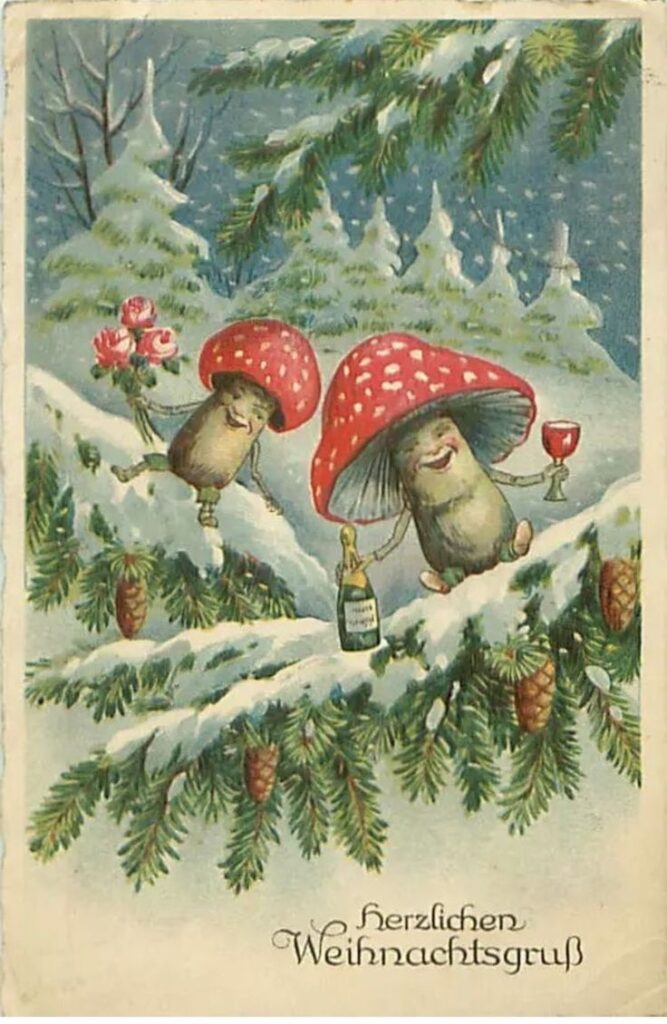
Amanita is sometimes referred to as a “magic mushroom” though that is a misconception; that title belongs to less colorful psilocybin-containing varieties. This iconic red mushroom is more commonly known as “Death Cap” or “Fly agaric” and it is extremely misunderstood.
If you didn’t recognise the name instantly, you’d definitely be familiar with the white polka dotted, red cap of this icon. Even children draw mushrooms in this likeliness. Imagine what future archeologists or other worldly visitors would think if they saw all of the Death Cap toys and household decorations we embrace today. Perhaps they’d conclude that we are a more progressive and spiritual bunch than we seem on the surface!
This is not a post specifically on the Amanita fungi, so I’ll reserve the botanical and spiritual deep dive for another post, but I have a few things to clear up first. This fungi is still psychoactive BUT is technically considered a deliriant rather than a psychedelic. This is because of the receptors that respond to its active ingredients, which do not feature the famous psilocybin most people associate with a trippy experience. Instead, it contains muscimol, ibotenic acid, and muscarine as the main active compounds.
What does this have to do with Christmas? The specifics, though, are less important here than the growth patterns and traditions associated with it. Amanita is often found growing under Birch trees. We more commonly know this as our Christmas Trees. But why do we decorate our trees? Well, after these fungi were harvested, they were often hung on these same trees to dry before they were handed out by Shamans to their community. Imagine a psychedelic ornament exchange party.
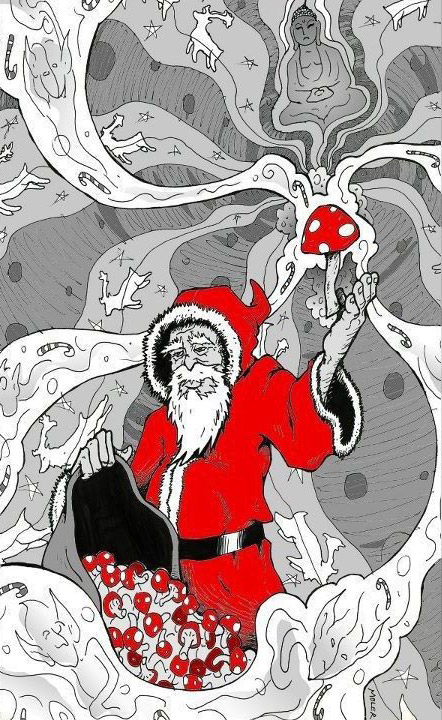
Back to those outfits I mentioned earlier, this is well documented in different cultures like the Native Americans, Siberians, and Aztec. Regardless of the native names, these red and white cloaks or costumes often resembled what has become the inspiration for the modern “Santa Suit”.
Interestingly, elves (or nature spirits) are often associated with the experiences of people who consume these fungi. This might account for why artistic portrayals of these mushrooms often include elves or fairies, as well as flying reindeer who were also known to have consumed these scarlet delights growing under the trees.
There is also a not-so-surprising resemblance between our practice of placing presents under our trees and the growth habits of these fungi. All relatable examples of how this profound knowledge is subliminally carried through the ages, as is often the case with ancient wisdom.
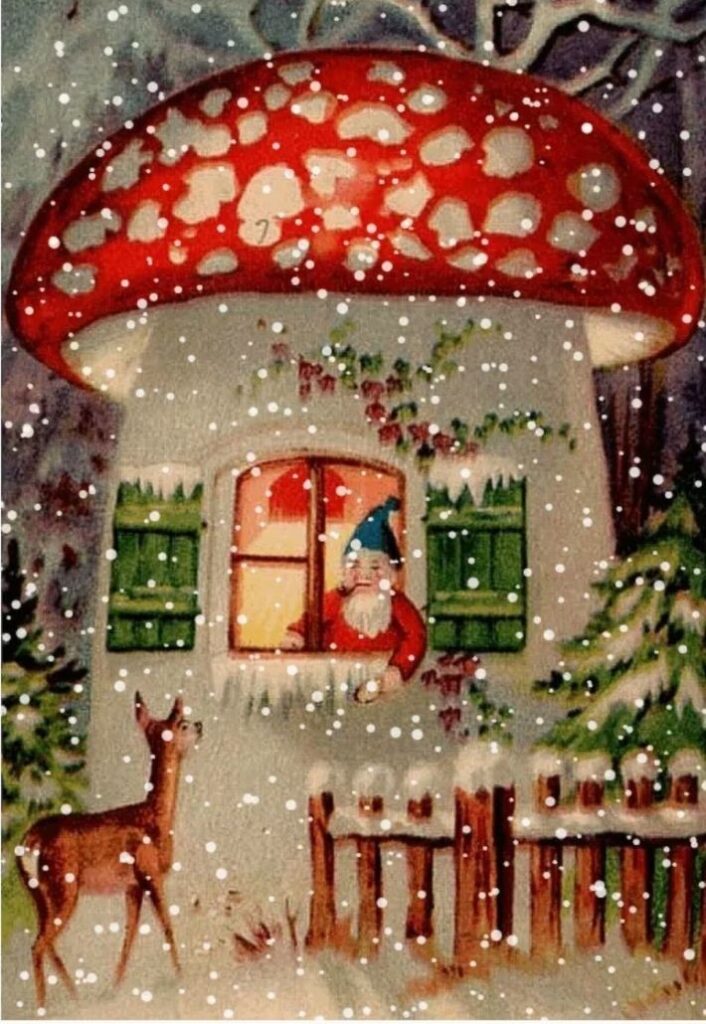
Next time you put up a Christmas tree, consider adding a few more mushroom decorations to it, specifically in homage to your ancestors who understood the transcendent and transformational gifts of Mother Nature that we often enjoyed at Winter Solstice.
Even if you’re in the Southern Hemisphere like me, you can still tap into countless generations of cultures who celebrated another turning of the seasonal year, the death and rebirth cycle of the God through the pagan wheel of the year, and the promise of new life that would come after this harsh period, and the spirit of gift-giving and spending time with loved ones.
Reclaim your heathen roots and see joy in people decorating their Pagan trees and partaking in celebrations – because you know where they stem from and the true meaning of living in sync with the cycles of the natural world. We may not all be partaking in psychoactive mushrooms – but I know it sure inspires a few artistic muses in me. Perhaps, you hear the call too.
On that note, it’s time for me to step away from technology and connect to my inner Artist.
How did you celebrate this Christmas? Do you have your own traditions to tap into this powerful portal? I’d love to hear your thoughts in the comments below!
Blessed Be xo